
Decode Terrell County Property Tax Records
Two offices split the work. The Terrell Tax Assessor sets property values and handles exemptions. Appraisal questions and exemption applications start there. The Terrell Tax Commissioner handles the money side: billing, collecting, accounting for, and disbursing ad valorem taxes in Terrell County. Billing staff cannot change a value or a millage rate. For those items, take the question to the office that controls the field.
| Field | What It Shows | Where |
|---|---|---|
| Fair-market value | Assessor's estimate under Georgia valuation rules | Assessor parcel record |
| Assessed value | Taxable valuation level before applicable exemptions | Assessor parcel record |
| Exemptions or special use | Homestead, current-use, conservation, or other status where displayed | Assessor record and application file |
| Bill and payment | Amount billed, balance, and transaction information | Tax Commissioner |
| Delinquency and Fi.Fa. | Collection status and recorded tax execution | Tax Commissioner and Clerk |
Georgia law generally assesses property at 40% of fair-market value. Some agricultural or current-use programs recognized in Terrell County apply a 30% level instead. A recent deed or PT-61 filing may show what a property actually sold for. That sale figure is a third number, though. Neither the tax bill nor the assessed value should ever be reported as the sale price. The tax bill is not the sale price. The assessed value is not the sale price either.
Separate the Assessor from the Tax Commissioner
| Task | Office | Access |
|---|---|---|
| Find parcel, value, owner roll, or exemption | Board of Tax Assessors | qPublic/Schneider or Room F, 499 Rountree Drive SW |
| Ask about bill, payment, or delinquency | Tax Commissioner | 187 E. Lee Street, 229-995-5151, or tax site |
| Retrieve recorded Fi.Fa. or lien reference | Clerk of Superior Court | Real Estate & Lien Docket, 499 Rountree Drive SW |
The assessor's online data reflects the most current published digest, and its page sends tax-bill questions to the Commissioner. The county posts no precise update timestamp. Check the assessment year printed on each record before relying on it.
Use the Terrell Payment Form Correctly
The GovernmentWindow property-tax form asks for the payer's first and last name, phone, street, city, state, and ZIP. It also requests the owner name, account number, and amount due. Those are payment fields. They do not amount to a full public tax-roll search. Establish the parcel and its assessment in qPublic first. Then carry the owner or account reference to the payment channel. The Terrell County payment screen displays exactly what the payment stage requests.
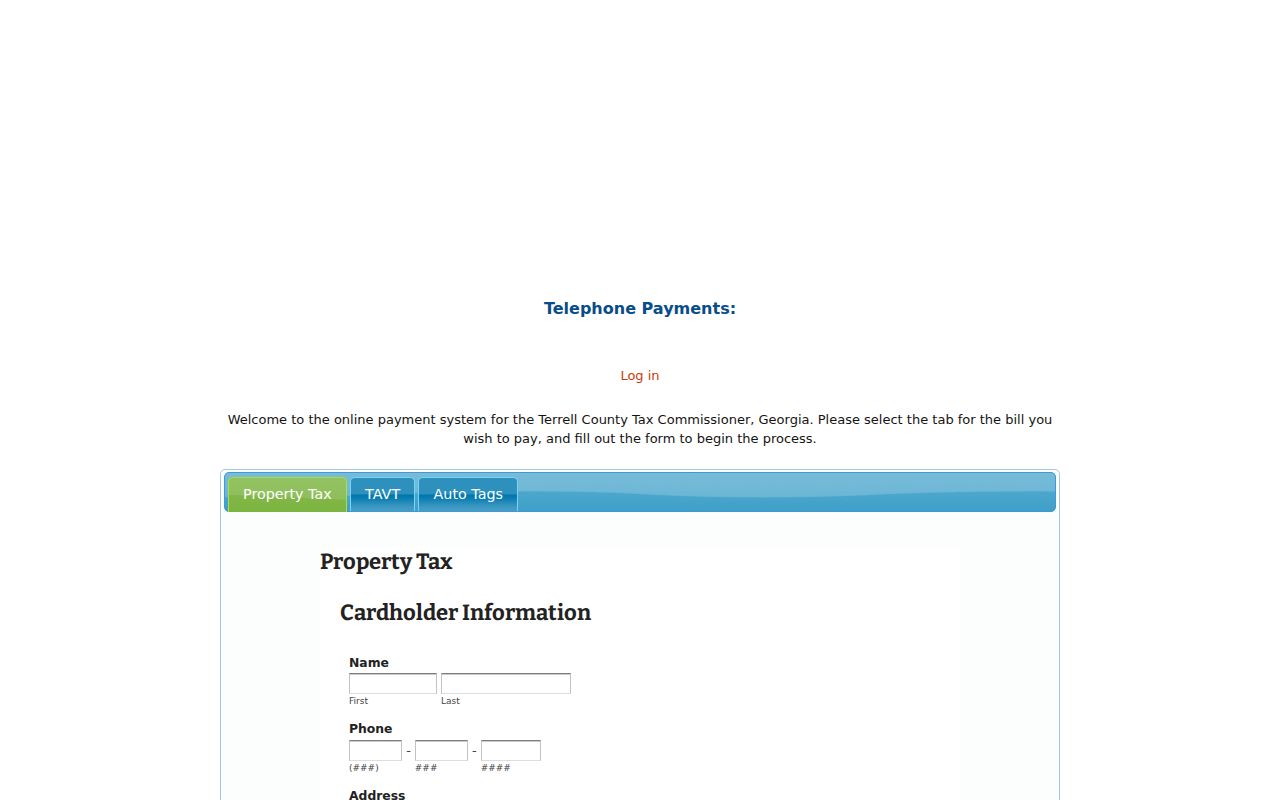
Confirm the account before you pay. Similar owner names and multiple parcels make costly mistakes easy.
Look Up a Terrell County Tax Bill
Start with the assessment record. That ties the owner, situs, map-and-parcel ID, tax year, value, and exemption status to one tract. Then pull the bill and balance from the Tax Commissioner's official service, or simply call the office.
- Search qPublic by situs address, owner name, parcel ID, or alternate ID.
- Copy the parcel/account identifier and verify the assessment year.
- Check fair-market and assessed values plus any exemption or special-use notation.
- Use the Tax Commissioner channel to verify the current amount, payment status, and prior balance.
- If delinquent, ask for the notice, Fi.Fa., lien, and tax-sale status rather than inferring them.
- Assessed value
- The valuation level used in the tax calculation before applicable exemptions.
- Millage or levy
- The rate applied by taxing authorities to the taxable value.
- Homestead exemption
- Qualifying relief tied to an owner-occupied residence and application rules.
- Tax lien or Fi.Fa.
- The recorded execution associated with unpaid tax collection.
Mark Terrell's December 20 Due Date
The county's tax information page sets the annual due date at December 20. Interest accrues after that. Thirty days past a delinquent notice, a Fi.Fa. gets filed in the Clerk's office. Collection can then escalate after that. It can include a title search. It can also include posting and photographing the property, notice costs, and four weeks of advertising in the Herald Journal before a tax sale. The county's published rules lay out this unusually specific sequence in full.
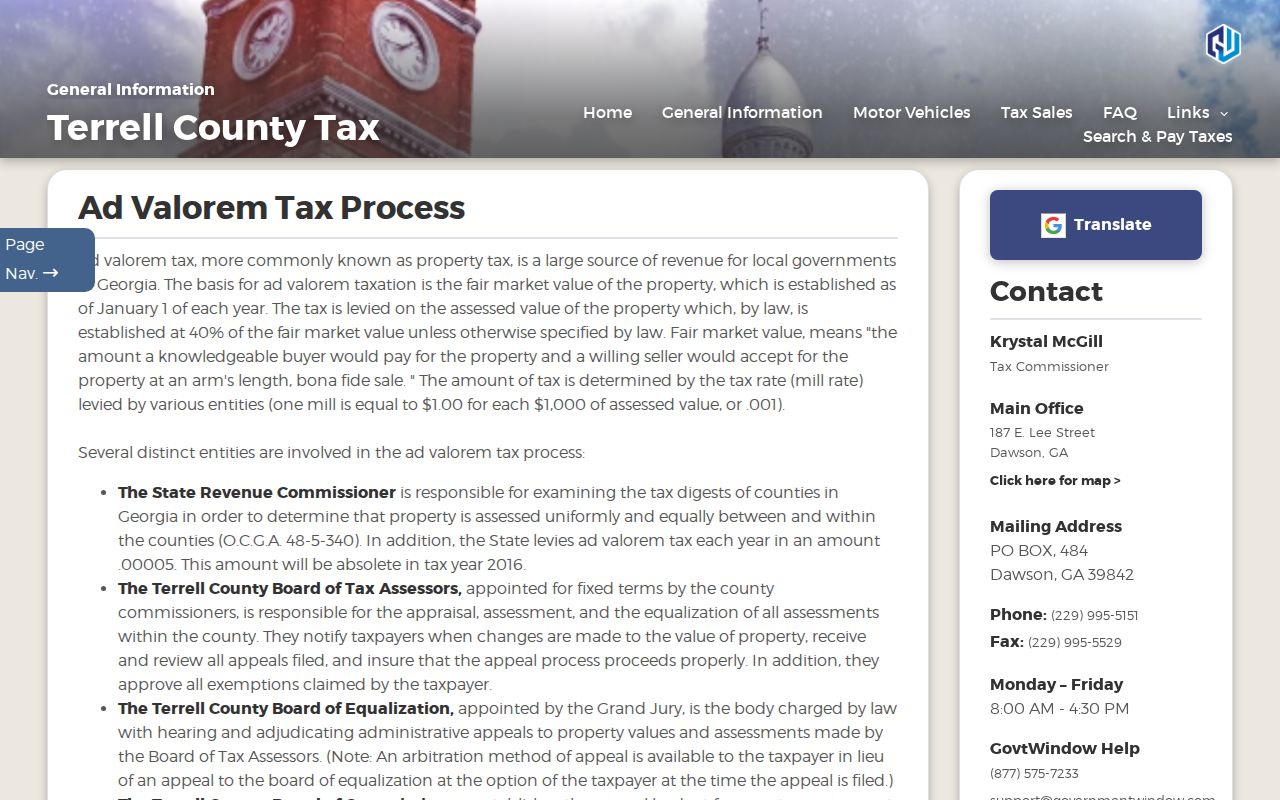
A delinquent balance alone doesn't mean a sale is scheduled. Verify each completed notice and filing step with the Tax Commissioner and the Clerk.
Note: Ask for the tax year and parcel ID because one owner may have multiple current or delinquent accounts.
Apply for Terrell Exemptions and Special Valuation
Terrell materials describe a wide menu of relief. That menu covers homestead exemptions plus agricultural, conservation-use, historic-property, brownfield, and timber programs. Eligibility rules and valuation methods differ across them. The Georgia Department of Revenue forms page carries statewide homestead, current-use, annual-return, and assessment forms. The application itself goes to the proper local office. The county tax page sets April 1 as the filing deadline for returns and exemptions. A homestead notation is a useful tax clue. It does not prove anyone currently occupies the parcel. So read the actual application and the assessor's current determination. The Georgia property-tax forms page is the official route to the paperwork.
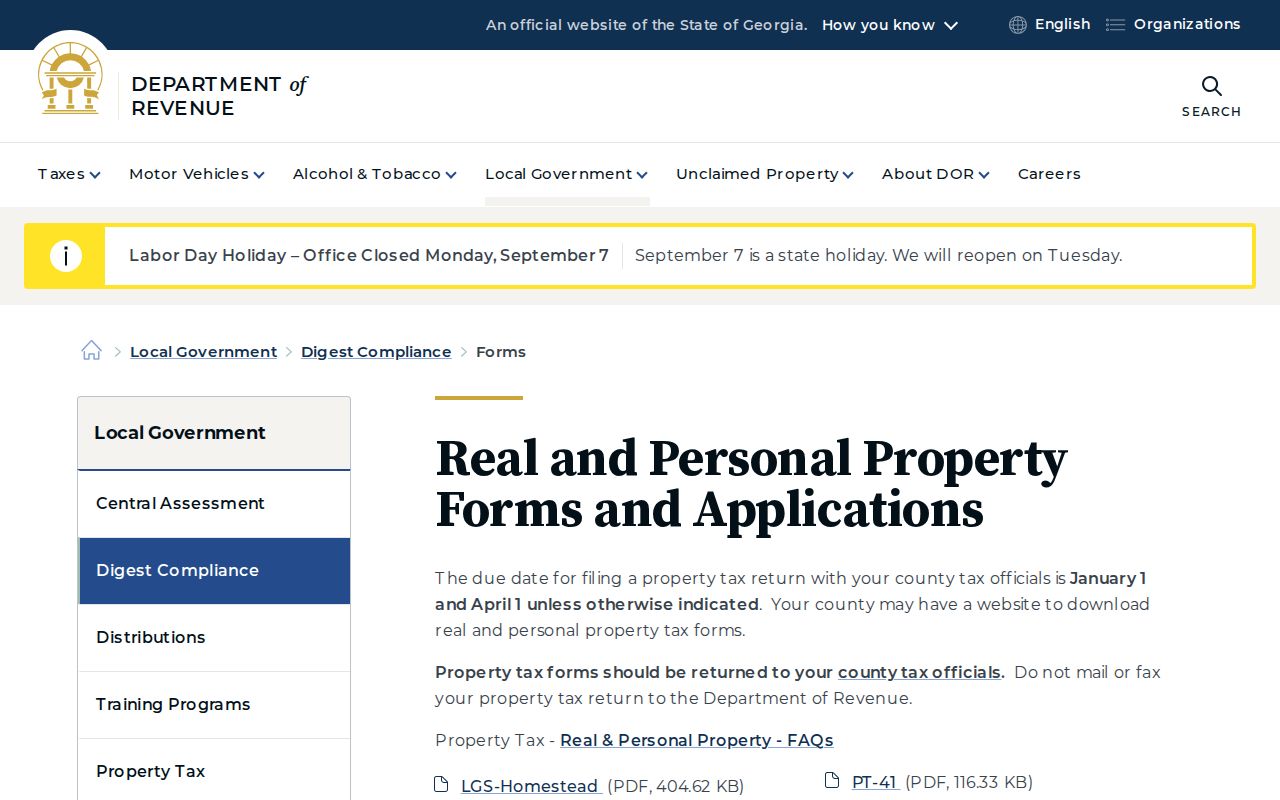
Match the form to the program you want, and confirm local submission instructions with the Terrell assessor.
Understand the GMASS Parcel Review
A current qPublic notice reports on Georgia Mass Appraisal Solutions and Services. That firm is running a countywide parcel review. Field work can mean checking the parcel characteristics that feed valuation. The notice does not say a deed has recorded. The tax roll does not update the moment a closing happens. When a characteristic or value changes, compare it against the annual assessment notice. Contact the assessor for the review record. The tax year matters during an initiative like this. A screen drawn from one digest and a notice from another can show different values. Neither equals the property's recorded sale price.
Compare Market, Assessed, and Sale Figures
Fair-market value is the assessor's estimate under Georgia law. Assessed value is the share used in the tax math. It is normally 40% of fair market before exemptions and special programs. Sale price belongs to one particular transaction. The recorded deed with its PT-61 filing is the place to verify it. The tax bill then layers millage and exemptions onto the taxable base. All four figures can disagree without anything being wrong. Each one answers a different question. When comparing years, keep the digest year, the assessment notice date, the deed recording date in separate columns. The payment year belongs in a separate column too. A late-recorded transfer can put facts from different moments side by side. An active field review can do the same on neighboring screens.
Appeal a Terrell County Assessment
Georgia gives you 45 days from the date of the annual assessment notice to appeal. File with the county Board of Tax Assessors, following the notice instructions. Where it fits, use the PT-311A appeal form. Name the parcel, tax year, disputed value, and your chosen appeal ground. Good evidence includes comparable sales and photographs. Corrections to building or acreage characteristics also help. So can an appraisal, documents showing damage, or proof of a classification error. The state's form page confirms the PT-311A route and its deadline.
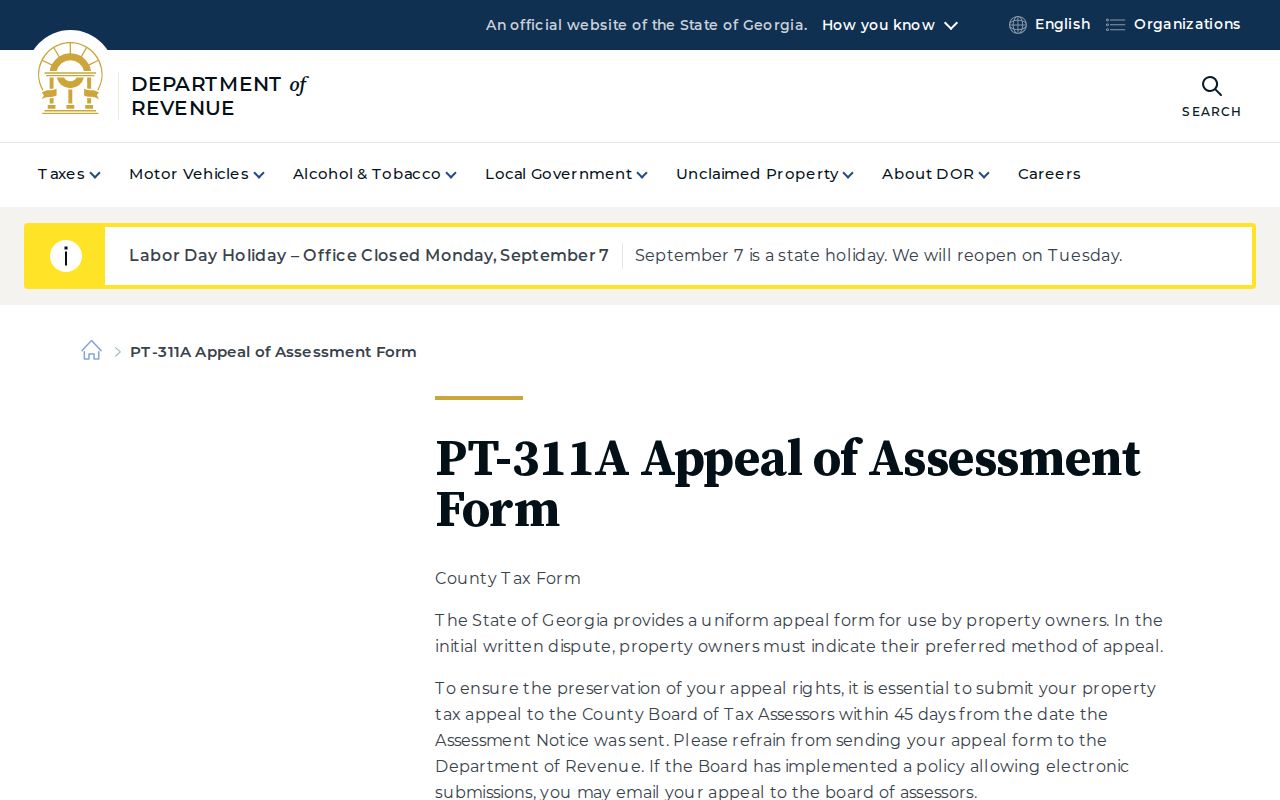
Keep proof of timely delivery and copies of everything you submit. Any later review depends on the record built during the appeal window.
Appeal window. Count 45 days from the date printed on the annual assessment notice, not from the day it was opened. Confirm receipt with the Terrell Board of Tax Assessors.
Use Every Tax-Record Access Channel
Terrell County gives you several ways to reach its tax records. Online, qPublic handles parcel and valuation data. The county's tax information site explains local rules, and GovernmentWindow takes payments. Prefer talking to someone? The assessor sits at 499 Rountree Drive SW, Room F, reachable at 229-995-5210, with office hours from 8 a.m. to noon and 1 to 5 p.m. The Tax Commissioner works from 187 E. Lee Street at 229-995-5151, open 8 a.m. to 4:30 p.m. If a Fi.Fa. has been filed, call the Clerk at 229-995-2631. When an electronic record exists but is not posted online, request it under the Georgia Open Records Act, which generally calls for a response or production estimate within three business days. Name the parcel, the year, the field, and the format you want; an office does not have to build a new analysis for you.